The global shift toward a circular economy has placed immense pressure on the construction and demolition sector to find sustainable ways to handle waste. A high-performance construction shredder serves as the cornerstone of this transition, allowing contractors and recycling plants to convert bulky debris into manageable, recyclable raw materials. By reducing the volume of waste and separating valuable components, these machines mitigate the environmental impact of landfills and lower the cost of material procurement.
Across the globe, urban renewal projects and infrastructure upgrades generate millions of tons of mixed waste daily, including concrete, wood, plastics, and metals. Without an industrial-grade construction shredder, the logistical cost of transporting this oversized waste is prohibitive, and the risk of environmental contamination increases. The integration of advanced shredding technology ensures that the "take-make-waste" linear model is replaced by a closed-loop system where old structures provide the foundation for new ones.
Understanding the nuances of shredding technology is not just about purchasing machinery; it is about optimizing the entire recovery lifecycle. From enhancing the purity of recycled aggregates to recovering high-value metals from reinforced concrete, the right equipment maximizes ROI while adhering to increasingly strict international environmental regulations. This guide explores the technical depth and operational advantages of deploying a construction shredder in modern waste management.
Global Context of Construction Shredding Technology
The global demand for a construction shredder is driven by the exponential growth of urbanization and the stringent mandates set by organizations like the European Union and the World Bank. In many developed regions, landfill taxes have skyrocketed, making the on-site processing of demolition waste a financial necessity rather than a choice. Data suggests that nearly 30% of all waste generated globally comes from the construction sector, creating a massive opportunity for material recovery.
The primary challenge lies in the heterogeneity of the waste. A single demolition site can produce a mix of asphalt, gypsum, reinforced steel, and treated timber. Traditional crushing methods often fail to handle this diversity, leading to equipment downtime and contaminated output. This is where the specialized design of a construction shredder becomes critical, utilizing high-torque, low-speed shearing to break down mixed materials without creating excessive dust or noise pollution.
Defining the Modern Construction Shredder
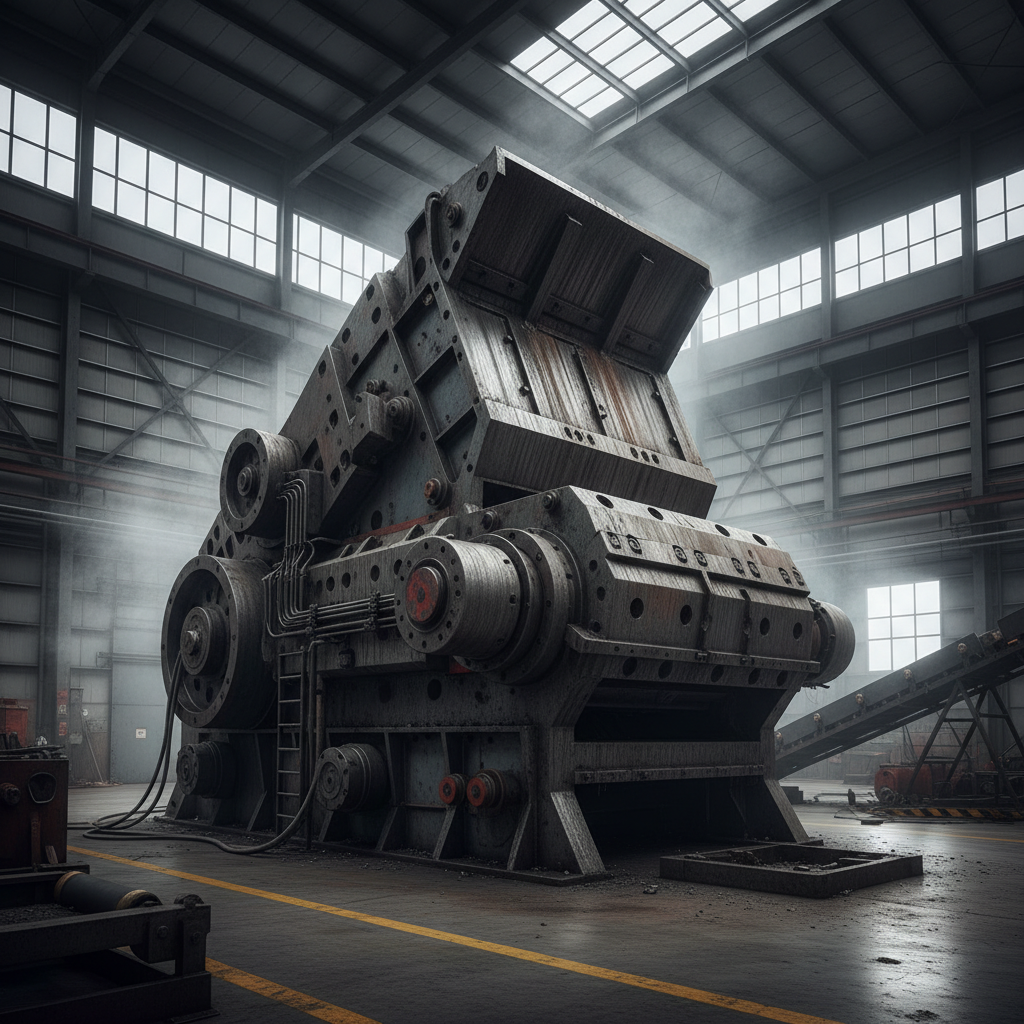
In simple terms, a construction shredder is a heavy-duty industrial machine designed to tear, shear, and size large volumes of construction and demolition (C&D) waste. Unlike a primary crusher, which relies on compression and impact, a shredder uses interlocking rotors with hardened steel teeth to rip through tough materials. This makes it uniquely capable of handling "contaminated" streams—where wood is mixed with plastic or metal—which would otherwise jam a standard crusher.
From an industrial perspective, these machines are the "gatekeepers" of the recycling line. By reducing oversized debris into a uniform particle size, the construction shredder prepares the material for downstream processes such as magnetic separation for metals, air classification for light plastics, and screening for recycled aggregates. This sequence is vital for ensuring the purity of the final recycled product.
Beyond the technical specs, the construction shredder represents a shift toward humanitarian and ecological responsibility. By minimizing the need for virgin quarrying—which destroys natural landscapes—and reducing the carbon footprint associated with hauling waste over long distances, these machines play a pivotal role in sustainable urban development and disaster recovery efforts.
Core Components and Engineering Factors
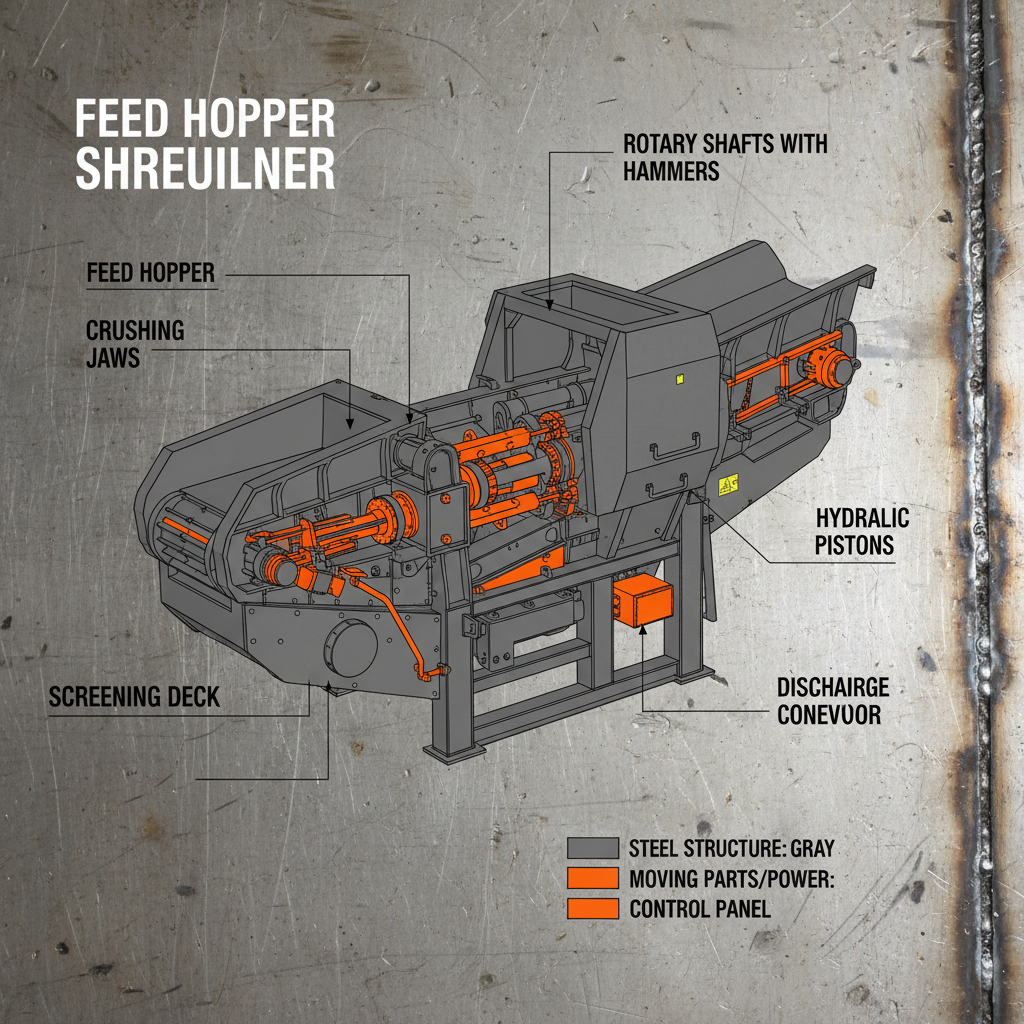
The durability of a construction shredder depends heavily on the metallurgy of its cutting chamber. High-chrome alloy steel or tungsten carbide inserts are typically used to ensure that the blades can withstand the abrasive nature of concrete and the toughness of structural steel. The engineering focus is on maintaining a precise gap between the rotors to prevent "slippage" of material, ensuring every pass results in a clean cut.
Scalability and power transmission are equally critical. Most modern units employ high-torque hydraulic drives or planetary gearboxes to maintain consistent torque even when encountering an unexpected piece of heavy reinforcement bar. This prevents sudden motor stalls and reduces the frequency of manual interventions, which is essential for maintaining a high throughput in a commercial recycling facility.
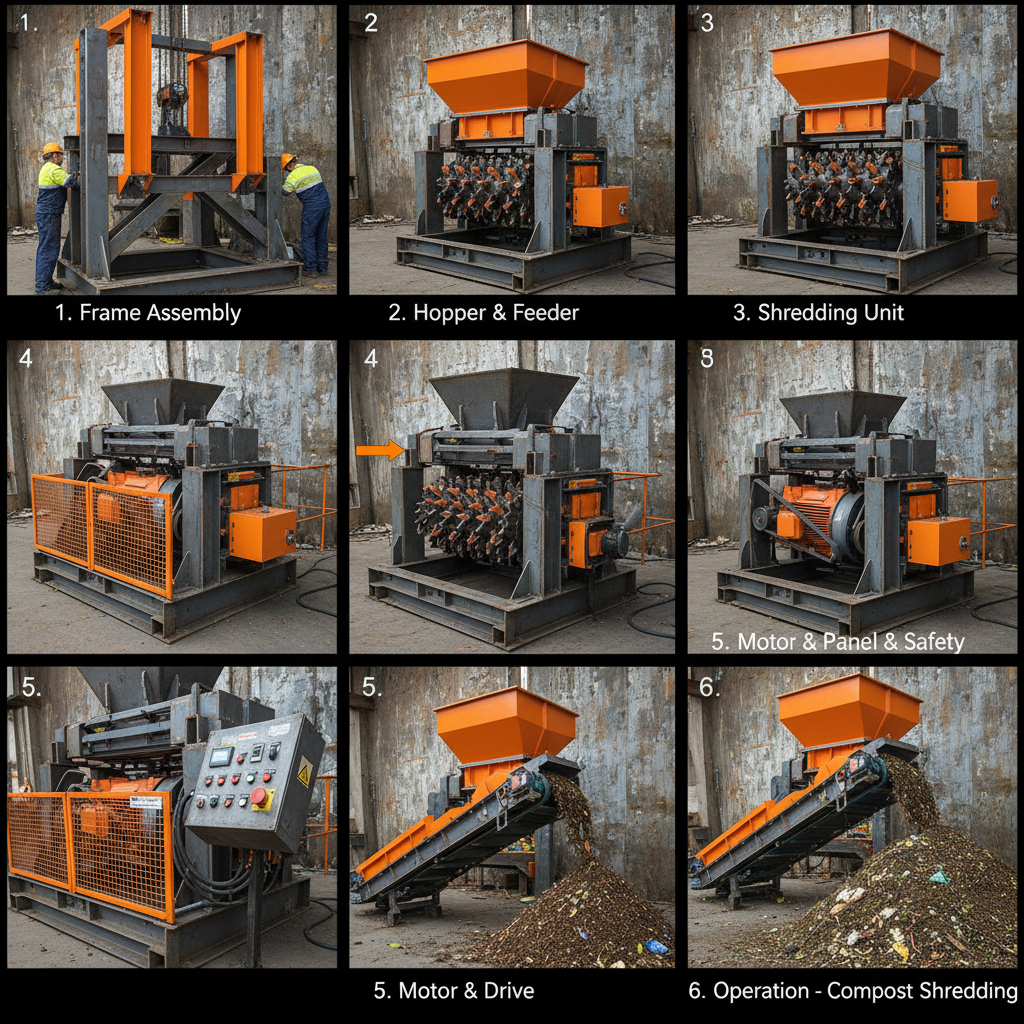
Finally, the integration of safety and control systems—such as auto-reverse functionality—allows the construction shredder to detect jams and automatically clear them. This intelligence reduces operational risk and ensures that the machine can run with minimal supervision, maximizing the uptime of the overall recycling line, including components like the metal and plastic separators.
Performance Metrics and Efficiency Analysis
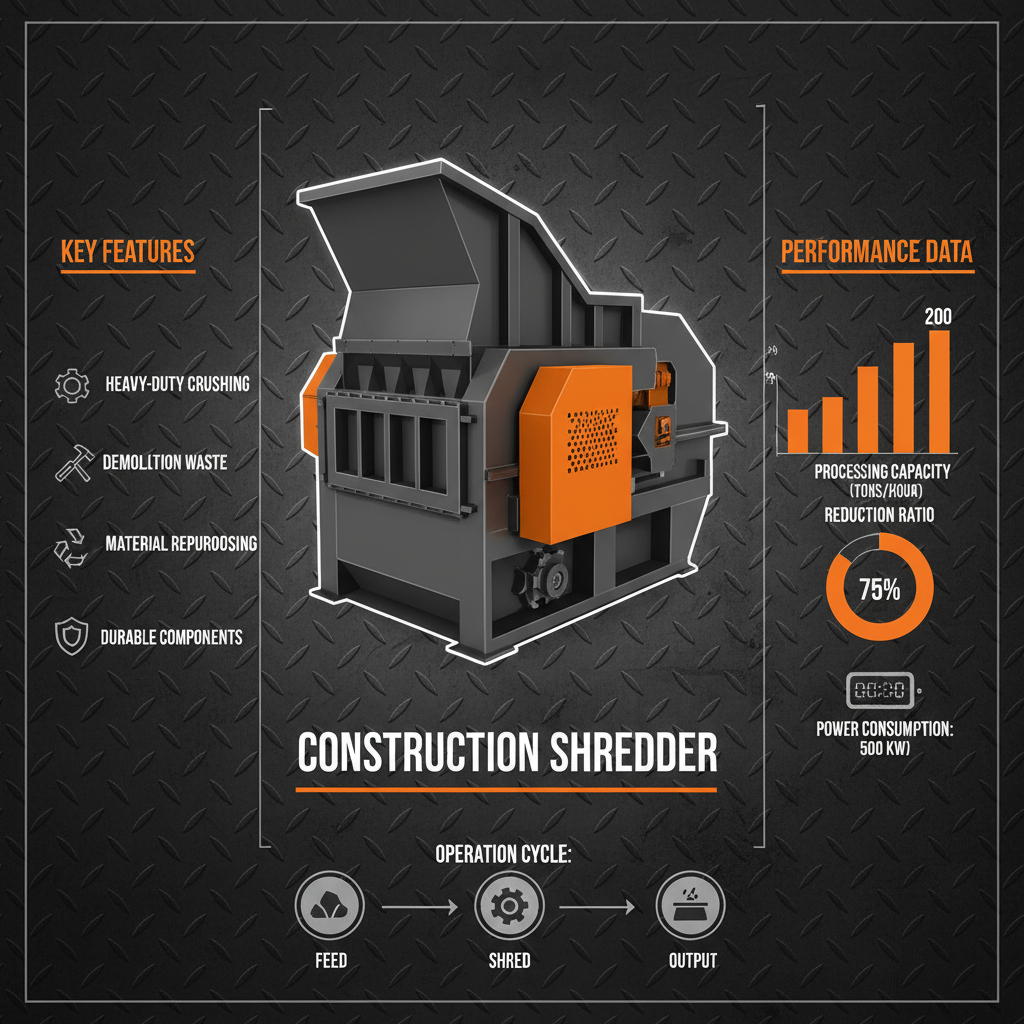
When evaluating the efficiency of a construction shredder, operators focus on throughput (tons per hour) versus energy consumption (kWh per ton). A well-optimized machine minimizes the "energy-per-ton" ratio by using optimized tooth geometry that slices through material rather than crushing it through brute force. This efficiency not only lowers operational costs but also reduces the carbon footprint of the recycling process.
Another key metric is the "Output Uniformity," which determines how effectively the shredded material can be processed by subsequent separators. A construction shredder that produces a consistent particle size reduces the load on secondary screens and increases the recovery rate of valuable metals and plastics, directly impacting the profitability of the waste management operation.
Comparative Efficiency of Construction Shredding Methods
Global Applications and Industrial Use Cases
In large-scale urban redevelopment projects in cities like Singapore or London, the construction shredder is often deployed as a mobile unit. This allows the machine to move directly to the source of the waste, eliminating the need for thousands of truck trips across the city. By processing concrete and timber on-site, contractors can reuse the shredded material as road base or fill, drastically reducing the project's environmental impact.
Beyond urban centers, these machines are indispensable in post-disaster relief operations. After earthquakes or hurricanes, massive amounts of mixed debris (wood, metal, and masonry) block critical transport arteries. Deploying a high-capacity construction shredder allows emergency teams to clear roads quickly and convert the debris into usable material for temporary shelters or road stabilization, turning a logistical nightmare into a resource.
Long-Term Economic and Environmental Value
The long-term value of investing in a construction shredder extends far beyond the immediate sale of scrap metal. From a logical angle, the reduction in landfill tipping fees provides a direct and rapid return on investment. For many companies, the machine pays for itself within 18 to 24 months simply by eliminating the costs associated with hauling unsorted waste to expensive disposal sites.
Emotionally and socially, the adoption of shredding technology builds a brand's reputation as a leader in sustainability. In an era where "Green Building" certifications (like LEED or BREEAM) determine the eligibility for government contracts, the ability to prove a high percentage of material recovery is a competitive advantage. It signals a commitment to innovation and a respect for the local ecosystem.
Moreover, the reliability of a well-maintained shredder ensures operational stability. By reducing the risk of downtime and maintaining a steady flow of raw materials for the rest of the recycling line, businesses can secure long-term contracts with material buyers who demand a consistent quality and volume of recycled feedstock.
Future Innovations in Shredding Automation
The future of the construction shredder is inextricably linked to the Digital Transformation of the industry. We are seeing the rise of AI-driven sensors that can analyze the material entering the hopper in real-time, automatically adjusting the rotor speed and torque to match the density of the waste. This not only protects the machine from sudden shocks but also optimizes energy usage.
Sustainability is also driving the shift toward electric-powered shredders. By replacing diesel engines with high-capacity electric motors and battery storage, companies can operate "silent" and "zero-emission" shredding sites in the heart of residential zones, removing the noise and air pollution constraints that previously limited operational hours.
Automation is further evolving with the integration of robotic sorting arms that work in tandem with the shredder. These systems can remove hazardous materials (such as asbestos or large chemical containers) before they enter the shredding chamber, ensuring a safer environment for workers and a higher purity of the final recycled output.
Analysis of Construction Shredder Technology Evolution
| Technology Generation |
Primary Driver |
Efficiency Score (1-10) |
Environmental Impact |
| Mechanical Basic |
Volume Reduction |
4 |
High Noise/Emission |
| Hydraulic Enhanced |
Torque Control |
6 |
Moderate Noise |
| Smart-Sensing |
Material Detection |
8 |
Low Emission |
| Full Electric |
Carbon Neutrality |
9 |
Zero Emission |
| AI-Integrated |
Predictive Maintenance |
10 |
Optimized Resource Use |
| Modular Robotic |
Purity Maximization |
9 |
Minimal Waste |
FAQS
While a crusher uses compression to break brittle materials like concrete, a construction shredder uses shearing and tearing. This allows the shredder to handle mixed waste—including wood, plastics, and metals—without jamming, making it far more versatile for demolition sites where the waste stream is not pure.
Regular inspection for wear and tear is key. We recommend using hardness-testing tools to monitor blade degradation and scheduling rotations or replacements before the cutting edge is completely lost. Additionally, ensuring that non-shreddable "tramp" materials (like oversized solid steel beams) are removed manually prevents catastrophic blade failure.
Yes, high-torque construction shredders are specifically designed to cut through steel reinforcement bars. The slow-speed, high-power rotors rip the rebar away from the concrete, which simplifies the downstream process of using magnetic separators to recover the steel for smelting.
Mobile units offer unparalleled flexibility by reducing transport costs and emissions. While stationary units often have higher total throughput capacities, modern mobile shredders are engineered with similar torque and durability, making them highly effective for most on-site demolition projects.
These certifications award points for diverting waste from landfills. A construction shredder allows for the high-percentage recovery of materials that would otherwise be discarded. By documenting the volume of material shredded and recycled on-site, contractors can significantly boost their sustainability score.
Requirements vary by size, but most industrial units use either high-voltage electric motors (380V-480V) or diesel-hydraulic systems. The trend is moving toward hybrid or full-electric systems to reduce operational costs and comply with urban noise and emission ordinances.
Conclusion
The adoption of a high-performance construction shredder is no longer just an operational upgrade; it is a strategic necessity for any business operating in the modern built environment. By transforming bulky, contaminated debris into valuable, sorted raw materials, these machines solve the dual challenge of rising landfill costs and the urgent need for sustainable material sourcing. From the metallurgical precision of the cutting blades to the integration of AI-driven automation, shredding technology is the engine driving the circular economy in construction.
Looking forward, the industry will continue to move toward zero-emission, fully automated recycling hubs where shredders act as the primary intake system. For contractors and waste managers, the path to profitability now lies in the efficiency of recovery. We encourage you to evaluate your current waste stream and explore how integrated shredding solutions can reduce your overhead and environmental footprint. Visit our website for more professional recycling solutions: www.owrecycling.com