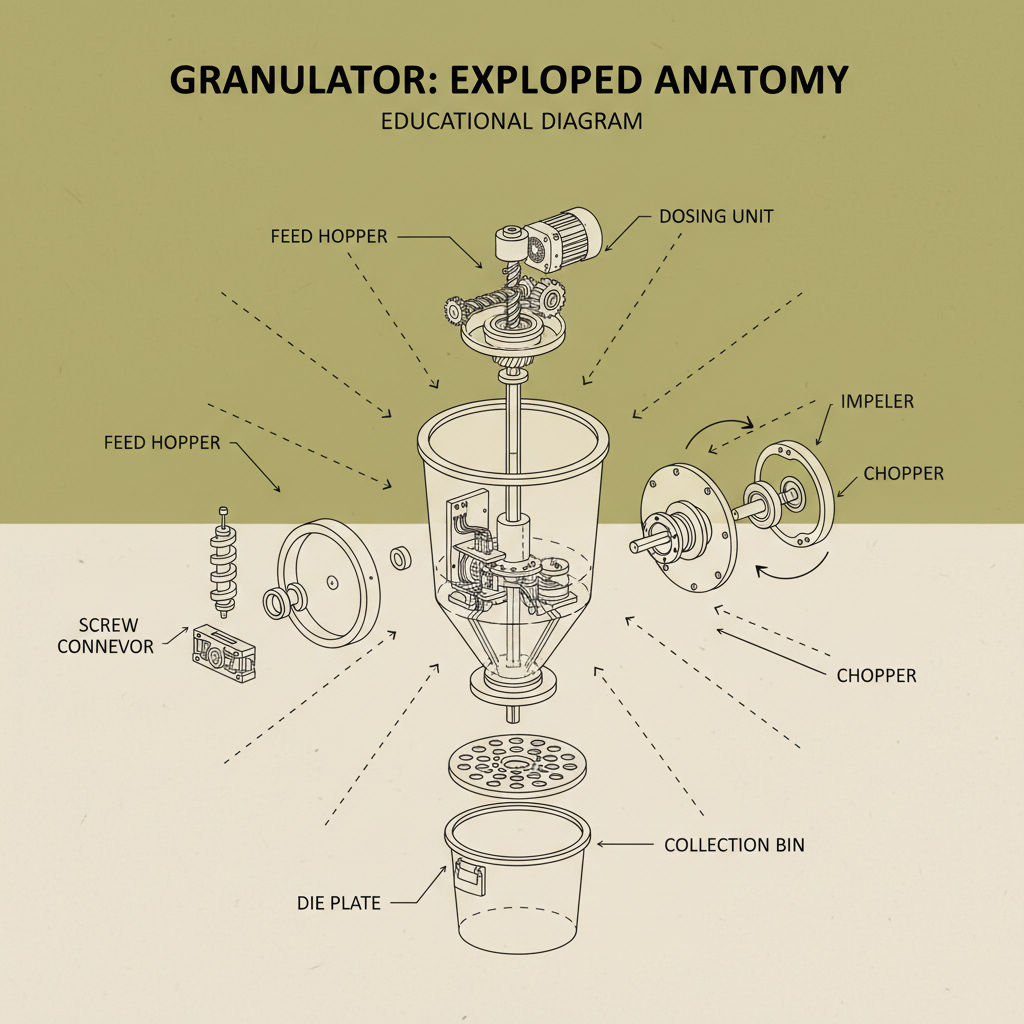
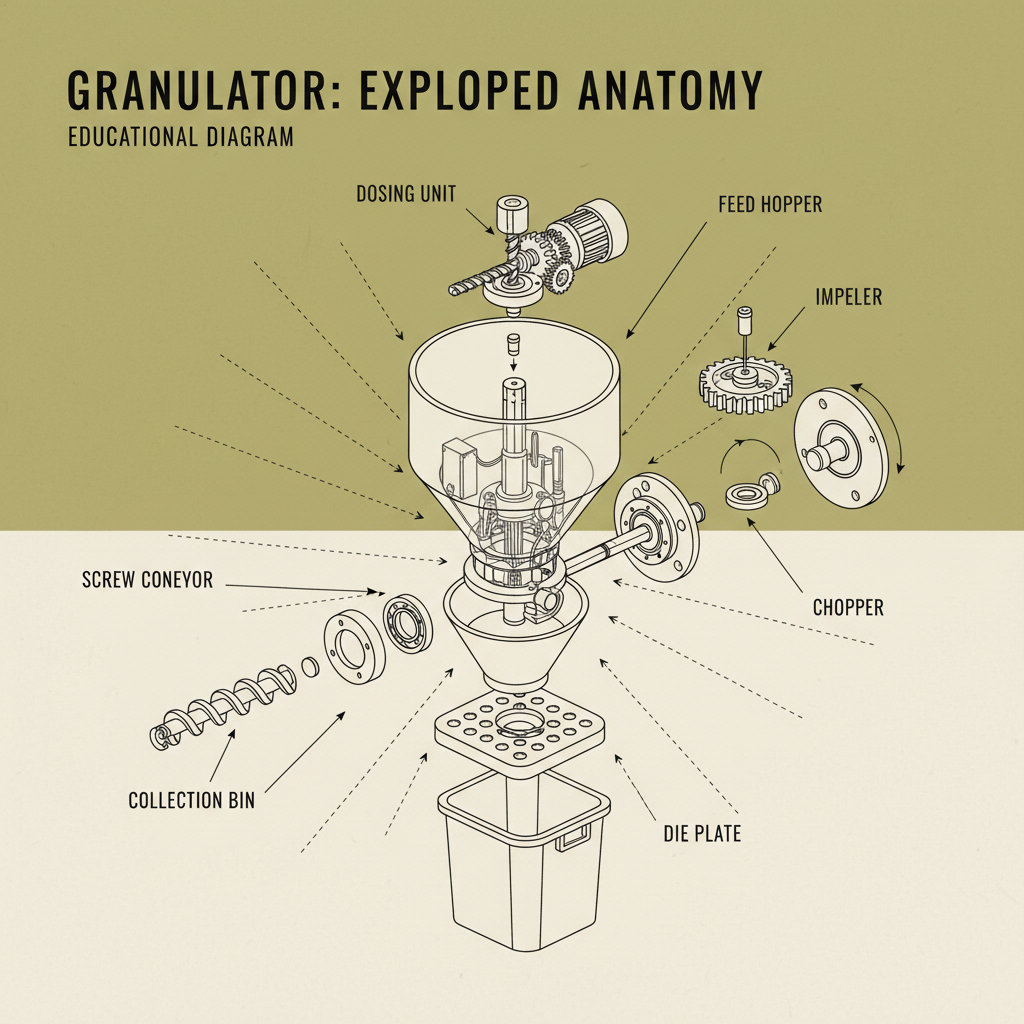
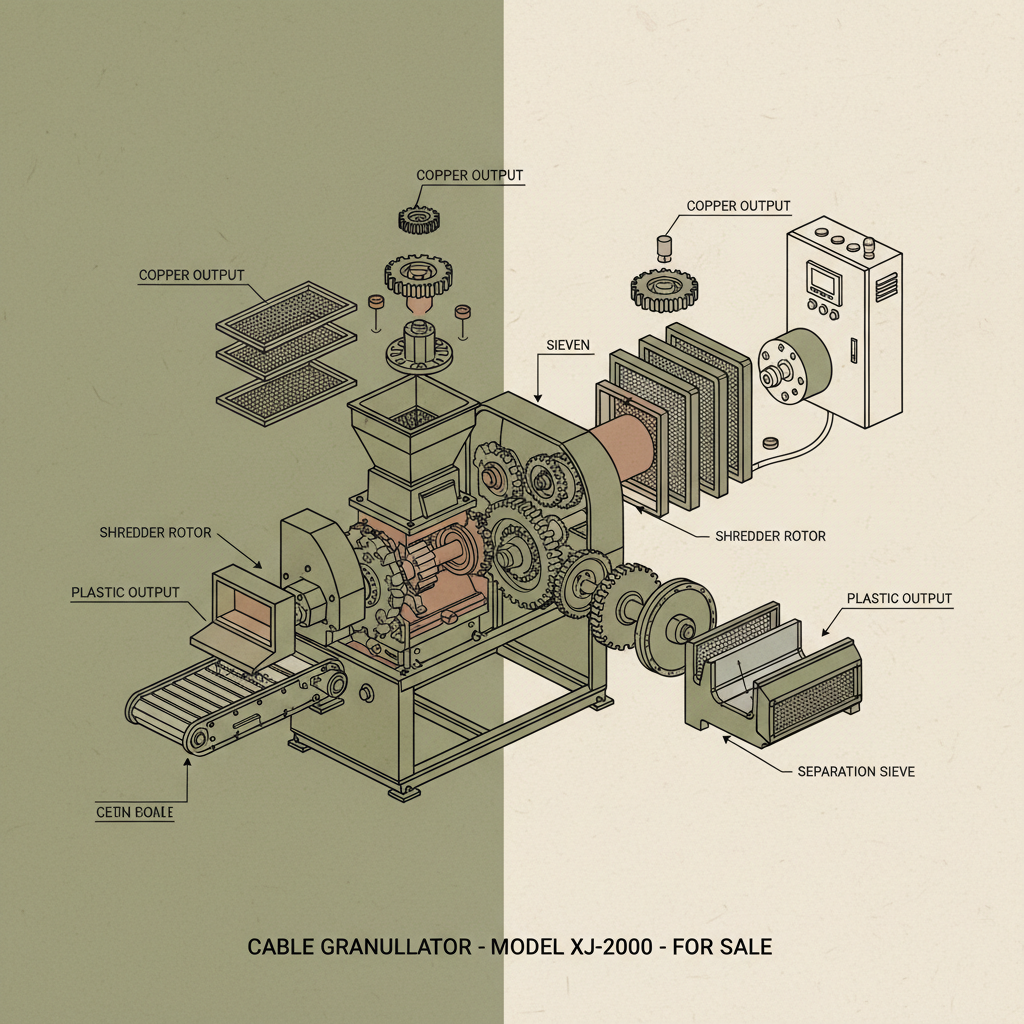
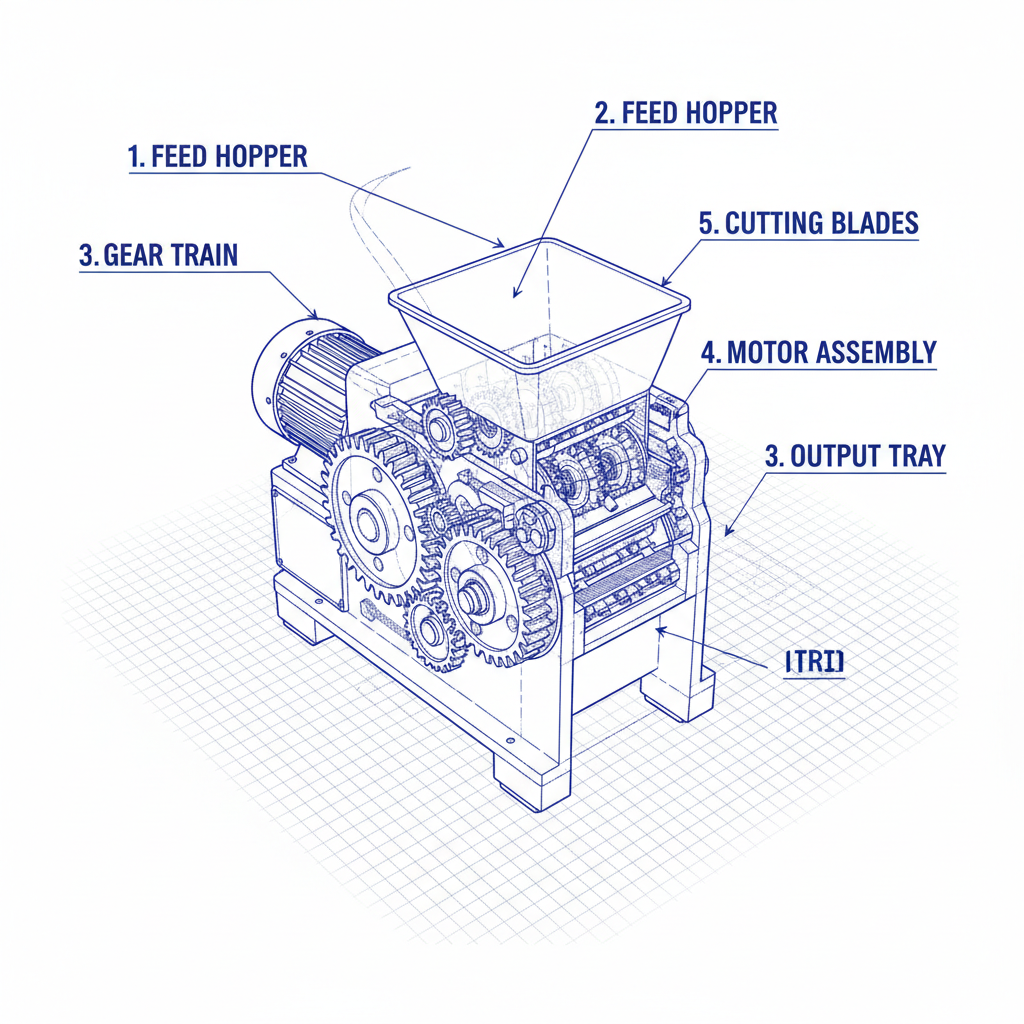
You know, these days everyone’s talking about Industry 4.0 and smart factories. A lot of it’s hype, honestly. But what is real is the push for more efficient material handling. I’ve been seeing a ton of requests for better granulators – not just bigger, but smarter ones. People are tired of bottlenecks and wasted plastic. They want stuff that just… works. And I mean really works, not just looks good on a spec sheet. Because, let me tell you, a beautiful spec sheet doesn’t save you when you're knee-deep in shredded plastic at 3 AM.
The biggest problem I see? Over-engineering. People get caught up in all the bells and whistles, the sensors, the automated adjustments… and forget the basics. I was at a factory in Ningbo last month, and they had this ridiculously complex granulator with a touchscreen interface the size of a small TV. It broke down three times in one shift. Three times! Turned out a simple bearing had failed, and nobody knew how to get to it because of all the extra gubbins. Keep it simple, that's what I always say.
Speaking of basics, let’s talk materials. Most granulators use hardened steel for the blades, obviously. But the type of steel matters. You’ve got your D2, your M2, your CPM10V… D2 is good for general purpose, tough enough for most plastics. M2 holds an edge a bit longer, but it’s more brittle. CPM10V, now that’s a serious steel. Smells different when you sharpen it, too – a kind of metallic tang. It’s expensive, sure, but if you’re grinding abrasive materials consistently, it'll pay for itself. And don't even get me started on the rotor material. Cast iron is common, but forged steel is much stronger, less likely to crack. You can feel the difference when you tap it.
The Modern Landscape of Granulation
To be honest, the demand for efficient and reliable granulation systems is soaring. It’s not just about recycling anymore; it’s about reducing waste, reclaiming valuable materials, and improving overall production efficiency. I've seen everything from small benchtop units for prototyping to massive industrial machines capable of processing tons of material per hour. And the push for more sustainable practices is definitely driving innovation in this area. People are starting to understand that properly sized and processed regrind can be just as good as virgin material.
Have you noticed the increase in requests for low-speed, high-torque granulators? It’s because they’re better at handling tougher materials and producing a more consistent granule size. Traditional high-speed granulators are great for brittle plastics, but they struggle with things like reinforced nylon or thick-walled containers. The low-speed machines just… chew through them. It’s a little slower, yeah, but the end result is far superior.
Design Pitfalls and Practical Considerations
I encountered this at a PVC pipe factory in India last time. They had a granulator that was completely inaccessible for maintenance. You had to practically dismantle the entire machine to change the blades! It was a disaster waiting to happen. Accessibility is HUGE. You need to be able to get to all the critical components quickly and easily. And don’t forget about safety interlocks. Too many machines I see have flimsy guards or no guards at all. People get complacent, and then… well, you know.
Another thing: dust collection. Granulating plastics creates a lot of dust, and that dust is flammable. A good dust collection system is absolutely essential. I've seen shops where the dust buildup was so bad it was a serious fire hazard. And the noise! These things can be deafening. Ear protection is non-negotiable.
Strangely enough, people often forget about the electrical requirements. A large granulator can draw a significant amount of power. Make sure your electrical system can handle it. Nothing worse than blowing a fuse in the middle of a production run.
Material Science: Beyond Just Steel
The blades aren’t everything. The rotor design is just as important. A well-designed rotor will distribute the material evenly and prevent clogging. I’ve seen rotors with different blade configurations for different types of plastics. Some have straight blades, some have curved blades, some have staggered blades. It's all about optimizing the cutting action for the specific material you’re processing.
The screen size also plays a crucial role. A smaller screen will produce a finer granule, but it will also reduce the throughput. A larger screen will increase the throughput, but it will produce a coarser granule. You need to find the right balance for your application. It’s a trade-off, always a trade-off. And the screen material matters too – hardened steel, stainless steel, even titanium for really abrasive stuff.
Don't underestimate the importance of bearings. High-quality bearings are essential for smooth operation and long life. Cheap bearings will wear out quickly and cause vibration and noise. I've seen bearings fail after only a few hundred hours of use. It’s a false economy to skimp on bearings.
Real-World Testing and Performance
Labs are great for controlled testing, but the real test is how a granulator performs in a real-world environment. I always recommend visiting a factory that's already using the machine you're considering. Talk to the operators, ask them about their experiences. What problems have they encountered? How easy is it to maintain? What's the throughput like?
I’ve also found it useful to run my own tests. I’ll take samples of the material we’re planning to granulate and run them through the machine myself. I’ll check the granule size distribution, the throughput, and the power consumption. I’ll also look for any signs of overheating or vibration. You gotta get your hands dirty, you know?
Granulator Performance Metrics
How Users Actually Employ Granulators
It’s funny, you design these things with a specific application in mind, but users always find new ways to use them. I once saw a guy using a granulator to shred old tires for landscaping mulch. Not what it was designed for, but it worked! People are resourceful.
Anyway, I think most customers use granulators for in-house recycling of scrap material. They grind up the sprues, runners, and rejects and then remelt them for reuse. It saves them money and reduces their environmental impact. It's a win-win.
The Pros and Cons: A Grounded Assessment
Let’s be real. Granulators are fantastic for reducing waste and reclaiming materials. They’re also relatively simple to operate and maintain. But they're not perfect. They can be noisy, dusty, and they require regular blade sharpening. And if you’re grinding abrasive materials, the blades will wear out quickly. It’s just the nature of the beast.
Another drawback is the potential for uneven granule size. If the blades are dull or the rotor is unbalanced, you'll end up with a mix of coarse and fine particles. This can affect the quality of the remelted material. You need to keep things dialed in.
But honestly, the benefits usually outweigh the drawbacks. The cost savings from recycling scrap material can be significant. And the environmental benefits are undeniable.
Customization and Specific Applications
You know, everyone has their own unique requirements. Last month, that small boss in Shenzhen who makes smart home devices insisted on changing the interface to , and the result was a week of headaches trying to get the power supply right! People always want something special.
We can customize everything from the blade material to the rotor speed to the screen size. We've even built granulators with explosion-proof enclosures for processing flammable materials. We've done special inlet designs for very long parts and custom dust collection systems for particularly dirty applications.
The key is to listen to the customer and understand their needs. And then build them a machine that does exactly what they need it to do, no more, no less.
Summarizing Key Granulator Specifications
| Material Compatibility |
Throughput Capacity |
Granule Size Range |
Maintenance Frequency |
| PP, PE, ABS, PVC, PET |
50-200 kg/hour |
2-12 mm |
Weekly blade inspection |
| Engineering Plastics (Nylon, PC) |
20-80 kg/hour |
1-8 mm |
Monthly bearing lubrication |
| Soft Plastics (Film, Bags) |
100-300 kg/hour |
3-15 mm |
Blade sharpening every 50 hours |
| Rigid Plastics (Buckets, Crates) |
30-100 kg/hour |
5-20 mm |
Rotor inspection quarterly |
| Fiber-Reinforced Plastics |
10-50 kg/hour |
2-10 mm |
Blade replacement every 100 hours |
| Bio-plastics (PLA, PHA) |
40-150 kg/hour |
1-6 mm |
Dust filter cleaning daily |
FAQS
Honestly, keeping the blades sharp is a constant battle. It depends on the material, of course, but abrasive plastics will dull them quickly. Clogging is also a common issue, especially with bulky or irregularly shaped parts. Proper material feeding and a well-designed rotor are key to preventing that. And dust control – always a pain! You've got to have a good dust collection system and keep it maintained.
There’s no single answer. It depends on the material you're grinding, the volume you're processing, and the quality of the blades themselves. As a general rule, inspect them weekly and sharpen them when they start to show signs of wear. If they’re severely damaged or chipped, replace them immediately. Don’t risk damaging the rotor or other components.
Safety first, always. Wear appropriate personal protective equipment, including ear protection, safety glasses, and a dust mask. Make sure all safety interlocks are functioning properly. Never reach into the machine while it’s running. And be aware of the potential for flying debris. Basically, treat it with respect – it's a powerful machine.
You can, but it's generally not recommended. Mixing different types of plastic can result in a lower-quality regrind and can even damage the machine. It's best to process each type of plastic separately. If you absolutely have to mix them, make sure they are compatible and that you adjust the granulator settings accordingly.
Regular maintenance is key. Keep it clean, lubricate the bearings, inspect the blades, and check the safety interlocks. Don't let things build up. A little bit of preventative maintenance will save you a lot of headaches down the road. And always use genuine replacement parts.
That’s a loaded question. Prices vary wildly depending on the size, capacity, and features. You can get a basic benchtop unit for a few thousand dollars, but a large industrial granulator can easily cost tens of thousands. It really depends on your specific needs and budget. Don’t cheap out, though – a quality granulator is an investment.
Conclusion
So, there you have it. Granulators aren't glamorous, but they're essential for efficient material handling and waste reduction. It's a surprisingly complex topic with a lot of nuance. From material selection to rotor design to safety features, there's a lot to consider. And it’s not all about fancy technology; sometimes the simplest solutions are the best.
Ultimately, whether this thing works or not, the worker will know the moment he tightens the screw. If it’s smooth, consistent, and doesn’t feel like it's fighting him, then you’ve got a good machine. If it's clunky, noisy, and gives him a headache, well… you know what you need to do. Visit our website at www.owrecycling.com to learn more.