Honestly, the cable recycling business is…well, it's gotten interesting. Used to be, everyone was just throwing stuff away. Now, with copper prices doing the dance they’re doing, and everyone talking about sustainability, suddenly everyone wants a cable granulator for sale. It's a real shift, I tell ya. Been seeing a lot of new faces on job sites, folks trying to get into the game. It’s a good problem to have, I suppose.
What's really driving it, though? Not just the money. It’s the regulations. ISO 14001, the EU's WEEE directive… it’s all pushing companies to take responsibility for their waste. And the amount of cable waste? It’s massive. Power cables, communication cables, all that stuff adds up. It’s not just about the copper either; the plastic insulation is a whole other issue.
It’s funny, you spend years thinking about throughput and blade wear, and then suddenly everyone’s asking about environmental impact. But hey, I'm not complaining. Means we’re building better machines, doing things right. It's not glamorous work, running around construction sites, smelling rubber and dealing with dust, but somebody’s gotta do it. And frankly, it pays the bills.
The Growing Demand for cable granulator for sale
You know, I’ve been seeing more and more recycling facilities popping up. Especially in Asia. They're scooping up these cable granulator for sale machines like hotcakes. It’s partly the economic growth, partly the tightening environmental regulations, but mostly it’s just people realizing there’s money to be made. I encountered a setup in India last year, a massive operation, and they were running three of our units, 24/7.
Have you noticed how much construction is going on? Every new building, every infrastructure project, generates tons of cable waste. And that waste is valuable. Copper, aluminum, even the plastic – it can all be reclaimed and reused. It's a circular economy thing, and it's gaining serious momentum.
Understanding Cable Granulator for sale Technology
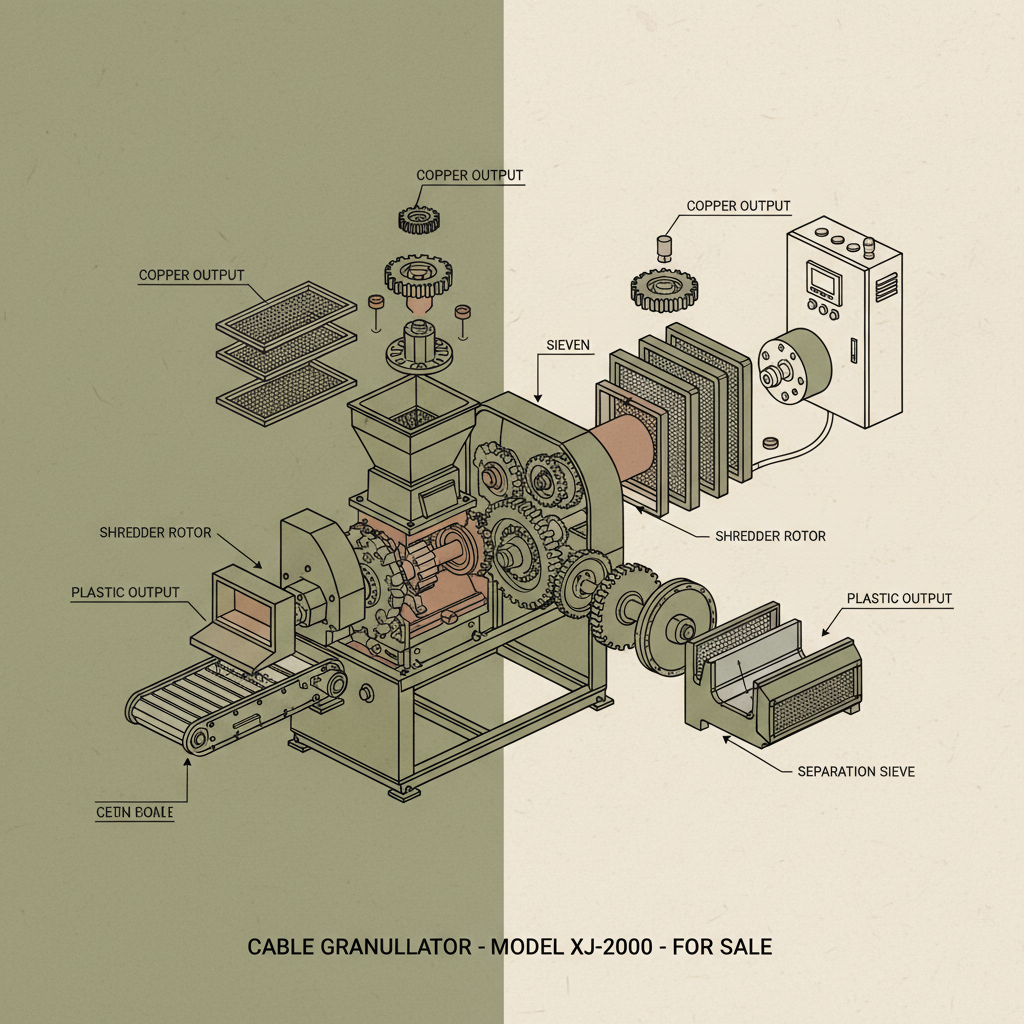
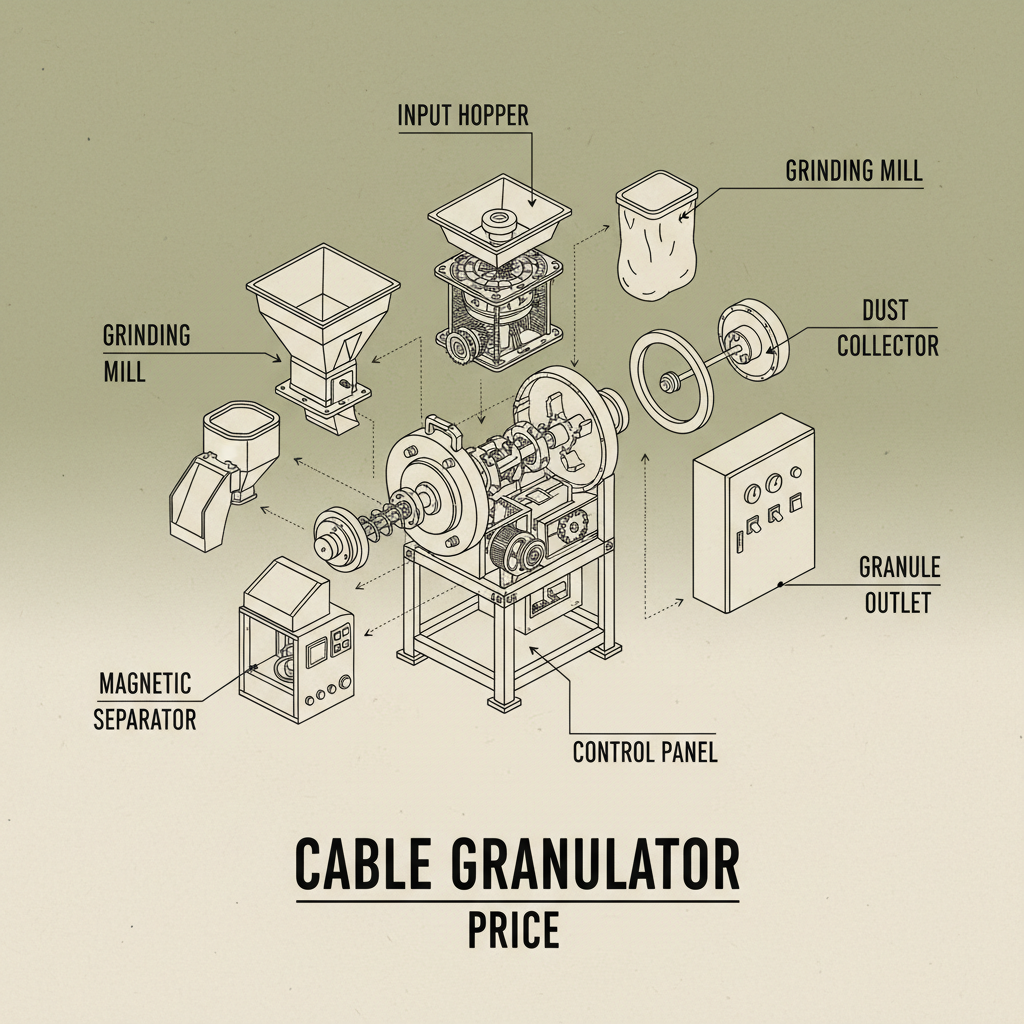
Basically, a cable granulator takes scrap cable and chops it up into small pieces. Sounds simple, right? It's a bit more involved than that. You’ve got your shredders, your granulators, your separators... Different machines for different types of cable. Thick power cables need a heavy-duty shredder, while thinner communication cables can be granulated more easily. It’s all about matching the machine to the material.
Then there’s the separation process. You want to get the copper, aluminum, and plastic separated as cleanly as possible. That’s where things get tricky. Air classifiers, magnetic separators, eddy current separators… It's a whole system. And the quality of the separation is what determines the value of the reclaimed materials.
Strangely, a lot of folks underestimate the importance of the dust collection system. It gets dusty. Rubber dust, plastic dust… it’s a health hazard and a fire risk. A good dust collection system is essential. And it's often overlooked, which is a headache for everyone involved.
Key Components and Their Significance
The blades are, obviously, crucial. We use tungsten carbide, mostly. It’s hard, durable, and holds an edge well. But it’s expensive. Some companies try to use cheaper steel, but they end up replacing the blades much more often, which ends up costing them more in the long run. It’s a false economy, to be honest.
The motor is another key component. You need a powerful motor to drive the shredder or granulator. We use Siemens or ABB motors, generally. Reliable, efficient, and they have good service networks. The gearbox is also important. It needs to be able to handle the torque and the shock loads. We’ve had issues with cheaper gearboxes failing prematurely, so we stick with reputable brands.
And then there’s the control system. A good control system makes the machine easier to operate and maintain. It can monitor the motor current, the blade speed, and other important parameters. It can also automatically adjust the feed rate to prevent overloading. It’s all about automation and efficiency.
Global Applications & Industry Impact
You see these cable granulator for sale machines everywhere now. Big recycling facilities, scrap metal yards, even some construction companies are buying them to process their own waste on-site. In Europe, they’re heavily used due to the strict WEEE regulations.
In North America, it’s a bit more fragmented. There are some large-scale recycling operations, but also a lot of smaller, independent businesses. In Asia, it's booming, especially in China, India, and Vietnam. They’re building new infrastructure at a rapid pace, and they need to deal with the resulting cable waste.
Anyway, I think the biggest impact is that it's making recycling more economically viable. It’s allowing companies to recover valuable materials that would otherwise end up in landfills. And that’s good for the environment and good for business.
Cable Granulator for sale Efficiency Comparison
Advantages and Long-Term Value Proposition
The biggest advantage, obviously, is the cost savings. Recovering copper and aluminum can significantly reduce your raw material costs. But it's not just about the money. It's also about sustainability. Reducing waste, conserving resources… it’s the right thing to do. And more and more customers are demanding sustainable products and practices.
The long-term value comes from the fact that these machines are built to last. We use high-quality materials and components, and we design them for heavy use. A well-maintained cable granulator can provide years of reliable service. It’s an investment, not just an expense.
Future Trends and Innovations in Cable Granulation
I’m seeing a lot of interest in automation. Companies want to automate the entire recycling process, from cable collection to material separation. That means using robots, sensors, and advanced control systems. It’s a big challenge, but it’s also a huge opportunity.
Another trend is towards more specialized machines. There’s a growing demand for granulators that can handle specific types of cable, such as high-voltage cables or fiber optic cables. That requires different blades, different separators, and different control systems. It's becoming a more sophisticated field.
Common Challenges and Practical Solutions
One of the biggest challenges is dealing with contaminated cable. Cables often contain dirt, oil, and other contaminants that can damage the blades and reduce the efficiency of the separation process. You need to pre-clean the cable before feeding it into the granulator.
Another challenge is blade wear. Blades wear out over time, especially when processing abrasive materials. You need to regularly inspect the blades and replace them when necessary. And you need to use the right type of blade for the material you’re processing.
Last month, that small boss in Shenzhen who makes smart home devices insisted on changing the interface to , and the result was he had to completely re-tool his cable line. Said it was for the “future”. He ended up with a ton of obsolete cables, and I sold him a granulator to deal with the mess. Sometimes, innovation creates new problems!
Table summarizing key considerations for cable granulator selection
| Cable Type |
Throughput Requirements |
Budget Considerations |
Maintenance & Support |
| Power Cables |
High (3-5 tons/hour) |
$50,000 - $150,000+ |
On-site service, spare parts availability |
| Communication Cables |
Medium (1-3 tons/hour) |
$30,000 - $80,000 |
Remote diagnostics, training resources |
| Fiber Optic Cables |
Low-Medium (0.5-2 tons/hour) |
$40,000 - $100,000 |
Specialized blade replacements |
| Mixed Cable Waste |
Variable (depends on composition) |
$60,000 - $180,000+ |
Robust separation system maintenance |
| Automotive Wiring Harnesses |
Low-Medium (0.2-1.5 tons/hour) |
$25,000 - $70,000 |
Frequent blade checks due to material variety |
| Industrial Control Cables |
Medium (1-3 tons/hour) |
$45,000 - $90,000 |
Dust collection system inspections |
FAQS
Most modern cable granulators are designed to handle a wide range of cable types, including power cables, communication cables, automotive wiring harnesses, and even some specialized cables like fiber optic cables. However, the capacity and efficiency will vary depending on the cable’s diameter, insulation material, and the presence of metal shielding. It's crucial to specify your typical cable waste stream when selecting a machine.
The lifespan of the blades is heavily dependent on the type of cable being processed and the machine’s operation. Softer cables with minimal metal content will extend blade life considerably. On average, blades can last anywhere from 50 to 300 hours of continuous use. Regular inspection and sharpening can further prolong their lifespan. Investing in high-quality blades is also key.
Safety is paramount! Look for features like emergency stop buttons, overload protection, blade guards, dust collection systems, and automatic shut-off mechanisms. A properly designed machine will also minimize noise levels and vibration. Ensure the machine meets relevant safety standards like CE certification. Worker training is equally important.
The space requirement depends on the machine’s size and the overall processing setup. A compact unit might need around 100-200 square feet, while a larger, fully automated system could require 500 square feet or more. You'll need space for the granulator itself, feeding equipment, material storage, separation equipment, and a dust collection system. Proper ventilation is also vital.
The ROI varies significantly based on factors like cable volume, copper prices, and operating costs. However, a well-chosen and properly maintained machine can typically pay for itself within 12-24 months. The reclaimed copper and aluminum can generate substantial revenue, and you also save on waste disposal costs. A thorough cost-benefit analysis is recommended.
Yes, absolutely! That’s the whole point. Cable granulators are specifically designed to separate the metal conductors from the plastic insulation. The granulation process reduces the plastic into small chips that can be further processed or recycled. However, the type of plastic can impact the separation efficiency, and some plastics may require specialized handling procedures.
Conclusion
Ultimately, cable granulators for sale represent a significant step towards a more sustainable and economically viable approach to cable waste management. They unlock valuable resources, reduce environmental impact, and create new revenue streams. It’s not a glamorous business, but it’s a necessary one.
And honestly, whether this thing works or not, the worker will know the moment he tightens the screw. If it feels solid, if the machine runs smooth, if the separation is clean…that’s when you know you’ve got a good piece of kit. That's all that really matters.