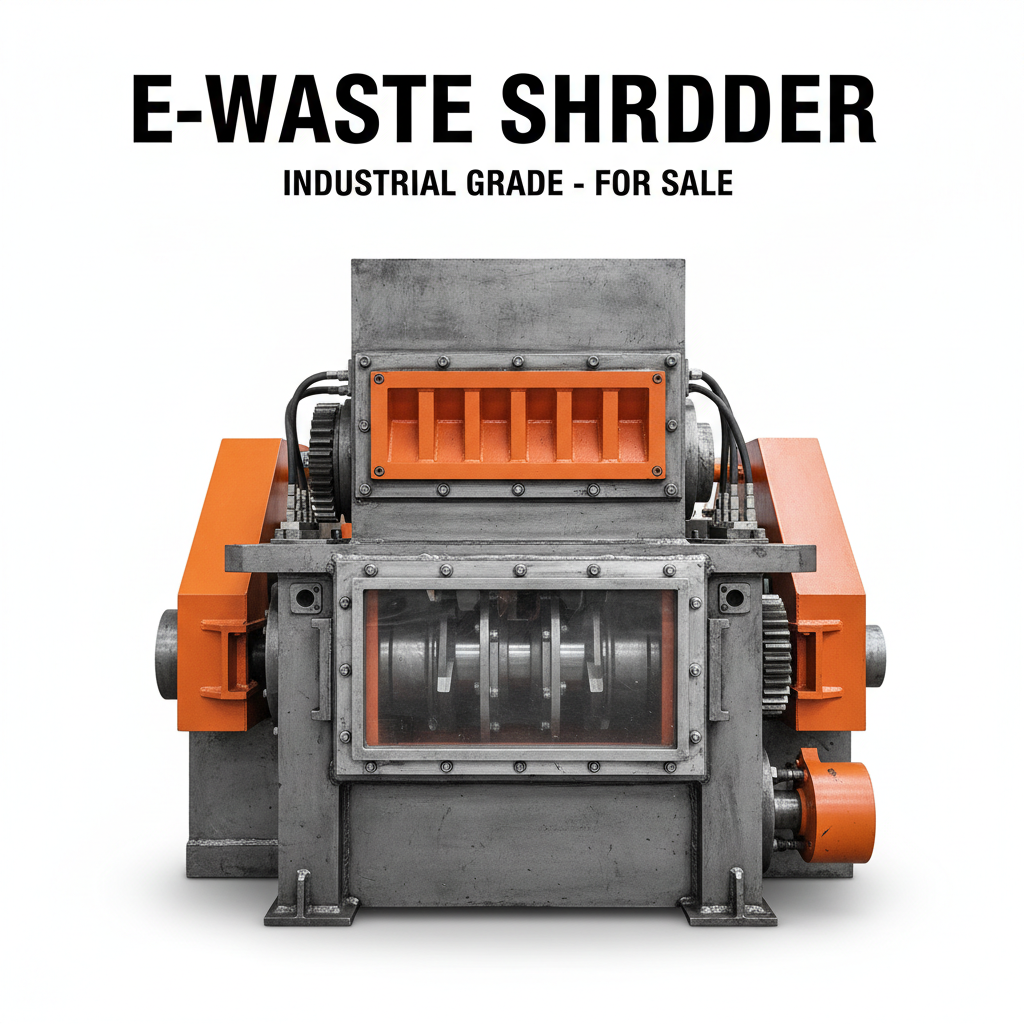
When evaluating the investment for a scrap recovery facility, the metal shredder price is rarely a fixed number, but rather a reflection of the machine's capacity, torque requirements, and material durability. For operators in the environmental equipment manufacturing sector, the cost is inextricably linked to the specific density of the metal being processed and the desired final particle size.
Budgeting for high-performance shredding equipment requires a deep understanding of the trade-off between initial capital expenditure and long-term operational efficiency. A low-cost entry-level machine may seem attractive, but without the appropriate metallurgy in the cutting blades, the total cost of ownership can skyrocket due to frequent downtime and premature wear.
This analysis explores the primary cost drivers of industrial shredders and how integrating these units into a full recycling line—utilizing components like the Eddy Current Separator—can maximize the return on investment by increasing the purity of recovered non-ferrous metals.

Understanding the Variables Driving Industrial Shredder Costs

The pricing of a metal shredder is not a commodity value but a tailored engineering cost. The primary driver is the "material hardness" the machine is designed to handle. Shredding aluminum cans requires significantly less structural reinforcement and motor torque than shredding abandoned car chassis or heavy industrial machinery, leading to a vast price disparity between light-duty and heavy-duty models.
Beyond material type, the volume of throughput—measured in cubic meters per hour—dictates the scale of the motor and the robustness of the frame. A machine capable of processing 15m³/h requires exponentially more structural steel and higher-grade electrical components than a small-scale workshop shredder, which directly elevates the market price.
Furthermore, the level of automation and integration into a wider recycling line affects the final cost. Systems that include conveyor synchronization and automatic reverse functions to prevent jamming offer higher efficiency but come with a premium price tag compared to standalone, manual-feed units.
Technical Specifications That Directly Impact Machine Pricing
From an engineering perspective, the most expensive components of a shredder are the cutting rotors and the drive system. The use of high-alloy steel or tungsten carbide inserts for blades increases the initial price but drastically reduces the frequency of blade replacements, providing better long-term value for high-abrasion materials.
The drive mechanism—whether it is a direct drive or a gearbox-driven system—also plays a role. Gear-driven systems typically offer higher torque for heavy metals but require more precise manufacturing and maintenance, contributing to a higher purchase price. The energy efficiency of the motor (IE3 or IE4 standards) also affects the cost, as high-efficiency motors reduce monthly utility overheads.
Finally, the structural integrity of the housing is paramount. Heavy-duty shredders feature reinforced chassis to withstand the immense vibration and pressure generated during the shearing process, ensuring the machine does not warp over years of continuous operation.
Practical Applications in Modern Waste Recovery Systems
Metal shredders serve as the critical "primary reduction" stage in various recycling workflows. In electronic waste (e-waste) processing, for example, shredders break down complex assemblies like refrigerators or server racks into manageable pieces. This allows subsequent stages, such as the Eddy Current Separator, to efficiently isolate non-ferrous metals from plastics and glass.
In the automotive recycling industry, shredders are used to process abandoned car sections. By reducing the volume of the chassis, the facility can more easily separate aluminum and copper blocks from the ferrous steel bulk. This volume reduction is essential for logistics, as shredded metal is far more dense and cheaper to transport than whole components.
Additionally, industrial shredders are integrated into plastic recycling lines to remove metal impurities from plastic scrap. By shredding the mixed waste, the system can more accurately filter out non-ferrous contaminants using magnetic and eddy current technologies, ensuring the final plastic resin is free of metallic fragments.
Comparing Shredding Throughput Against Operating Costs
When analyzing the cost-to-performance ratio, operators must look at the throughput efficiency. A machine that costs 20% more but provides 40% more throughput effectively reduces the cost per ton of processed material. This is where the scale of the operation determines the optimal equipment choice.
The following metrics illustrate the efficiency gain when moving from basic shredding units to optimized industrial systems integrated with automated separation technology, focusing on recovery purity and energy consumption per ton.
metal shredder price Performance Metrics
As shown, high-specification systems may have a higher initial cost but result in significantly higher recovery rates of valuable metals. This means the "price" of the shredder is recovered quickly through the increased sale value of the sorted, high-purity metal fractions.
Strategic Procurement and Vendor Evaluation Frameworks
Procuring a metal shredder requires looking beyond the quote. A professional procurement process evaluates the vendor's ability to provide customized engineering. Since every waste stream is different, a "one size fits all" shredder often leads to inefficiency or mechanical failure.
Key evaluation criteria include the availability of wear parts and the vendor's technical training capabilities. For instance, Onwang Technology provides one-stop solution services, including project and process design, which ensures the shredder is correctly sized for the specific input material, avoiding the common mistake of over-specifying or under-specifying equipment.
Buyers should also examine the vendor's track record in the specific application—whether it be municipal solid waste or specialized e-waste—to ensure the machine's design accounts for the specific contaminants found in those waste streams.
Technological Shifts in Metal Volume Reduction Equipment
The industry is moving toward "smart shredding," where sensors detect the material density in real-time and adjust the rotor speed to optimize energy consumption. This transition is expected to reduce operating costs by preventing unnecessary power draw during periods of low-density material feed.
Another trend is the integration of advanced metallurgy in cutting elements. New composite materials and specialized heat-treatment processes are extending the intervals between blade sharpening, which may increase the initial purchase price but stabilizes the operational budget by making maintenance predictable.
Furthermore, the push toward circular economy standards is driving the demand for "ultra-fine" shredding. As downstream separators become more sensitive, the need for smaller, more uniform particles increases, leading to the development of multi-stage shredding systems that combine coarse shredders with fine granulators.
Selection Guide for Different Recycling Scale Requirements
Choosing the right shredder depends on the balance between the volume of material and the required purity of the output. A small-scale operation focusing on copper wire may only need a specialized granulator, whereas a regional scrap yard requires a heavy-duty metal shredder capable of handling diverse alloys.
The table below outlines the typical selection criteria based on different operational scales and the associated technical priorities.
| Operation Scale | Primary Material | Critical Technical Priority | Recommended Configuration |
|---|---|---|---|
| Small Workshop | Copper/PCB Scrap | Precision Granulation | Cable & PCB Granulator |
| Mid-Sized Plant | Aluminum/Plastic | Throughput Balance | Metal & Plastic Shredder |
| Industrial Facility | Auto Chassis/Heavy Steel | High Torque/Durability | Heavy-Duty Double Shaft Shredder |
| Municipal Center | Mixed MSW | Contaminant Tolerance | Low-Speed High-Torque Shredder |
| E-Waste Specialist | Appliances/Electronics | Separation Efficiency | Shredder + Eddy Current Separator |
| Specialized Recovery | Non-Ferrous Impurities | Purity of Output | Integrated Recycling Line |
Ultimately, the most cost-effective solution is one that aligns with the facility's 5-year growth plan. Investing in a modular system that can be expanded with additional separators or conveyors allows a business to scale its capacity without replacing the core shredding equipment.
Frequently Asked Questions
Conclusion
Determining the right metal shredder price requires a shift in focus from the initial purchase cost to the total cost per ton of recovered material. By prioritizing technical durability, throughput efficiency, and the ability to integrate with advanced separation technology, operators can ensure that their equipment becomes a profit center rather than a maintenance burden.
For businesses seeking a customized approach to scrap recovery, reviewing the professional equipment ranges and one-stop solution services available through www.owrecycling.com can provide the necessary technical guidance to optimize their recycling infrastructure.