
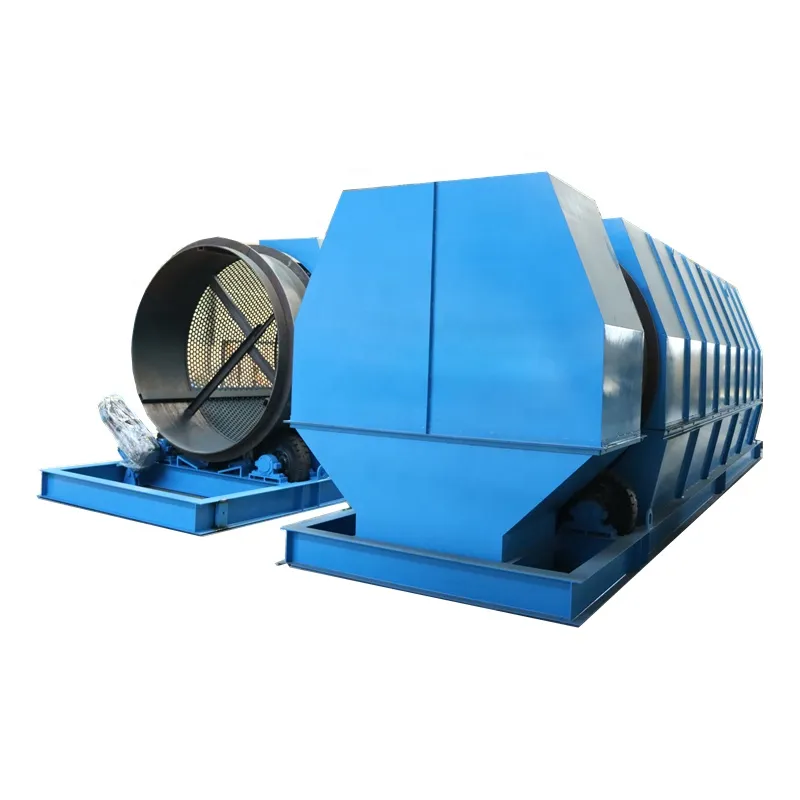
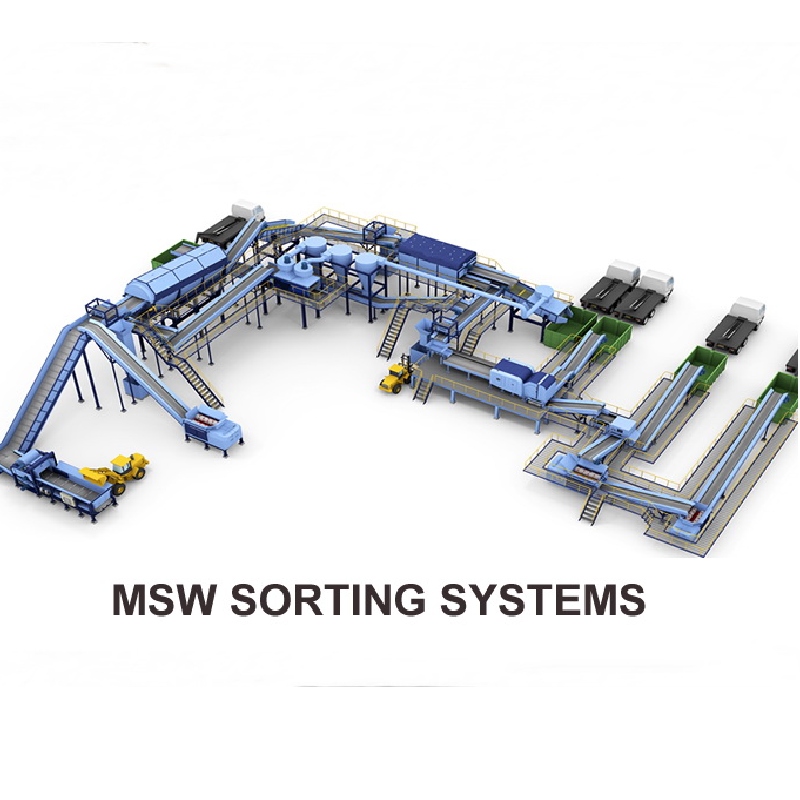
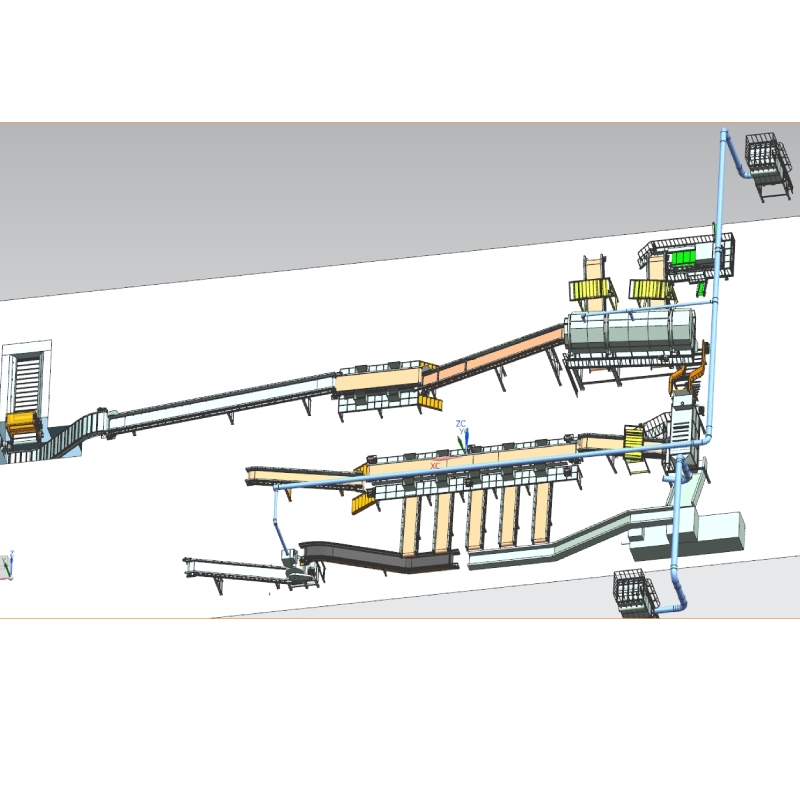
Our Municipal Solid Waste (MSW) Sorting Line is a professional-grade environmental solution designed to optimize waste management processes without requiring modifications to existing incinerator purposes. By integrating advanced classification technology, this system focuses on the reduction and harmless treatment of domestic and industrial waste, significantly increasing the waste heat value to boost the processing capacity of incineration plants while minimizing the environmental impact caused by burning plastics.
Engineered for versatility, the system efficiently processes a wide spectrum of materials, including household waste, oversized furniture, industrial scrap, tires, and hazardous materials. Through a sophisticated sorting mechanism, the line separates ferromagnetic and non-ferrous metals, organic kitchen waste, inorganic debris, and high-value plastics, transforming raw waste into recyclable resources and energy-efficient combustibles, thereby delivering substantial economic, ecological, and social benefits.
Detailed Parameters
| Model TS100 Capacity | 50-100 t/h | Model TS100 Power | 99.8 kw |
|---|---|---|---|
| Model TS200 Capacity | 100-200 t/h | Model TS200 Power | 140 kw |
| Model TS300 Capacity | 200-300 t/h | Model TS300 Power | 232 kw |
| Model TS400 Capacity | 300-400 t/h | Model TS400 Power | 337 kw |
| Model TS500 Capacity | 400-500 t/h | Model TS500 Power | 513 kw |
Key Advantages
Environmental Protection
Reduces plastic combustion to lower toxic emissions and minimize the impact on surrounding ecosystems.
Operational Efficiency
Increases incinerator processing capacity by optimizing waste heat values through precise classification.
High Versatility
Capable of handling everything from household waste and tires to hazardous industrial materials.
Resource Recovery
Efficiently extracts ferrous and non-ferrous metals for resale and organic waste for fertilizer.
Sustainable Output
Transforms non-recyclable combustibles into power generation fuel or eco-friendly briquettes.
Economic Benefit
Generates revenue through the sale of recovered plastics, metals, and processed organic materials.
Product Gallery
Management Platforms
Material Classification
Automated sorting of household and industrial waste into specific recyclable streams.
System Integration
Seamless integration with existing incineration plants without changing original purposes.
Hazardous Monitoring
Specialized handling and manual selection for batteries and hazardous waste materials.
Organic Processing
Management of kitchen waste and straw for conversion into high-quality organic fertilizer.
Inorganic Disposal
Efficient sorting of furnace ballast, bricks, and sand for reuse in construction.
Energy Optimization
Converting non-recyclable paper and wood into high-caloric power generation fuel.
Investment Return Comparison
| Comparison Metric | Without Sorting Line | With MSW Sorting Line |
|---|---|---|
| Waste Heat Value | Low / Inconsistent | High / Optimized |
| Incinerator Capacity | Standard | Significantly Increased |
| Environmental Impact | Higher Plastic Emissions | Reduced Toxic Emissions |
| Revenue Stream | Disposal Costs Only | Sale of Metals & Plastics |
| Landfill Volume | High Volume | Minimized / Resource Recovery |
Frequently Asked Questions
The line is designed for a wide range of materials, including household waste, industrial waste, large furniture, carpets, mattresses, scrap wood, tires, plastic/metal buckets, and hazardous waste.
By removing non-combustibles and classifying materials, it improves the overall heat value of the waste, which increases the processing capacity and efficiency of the incinerator.
Yes, it is specifically designed to be implemented in existing incinerator facilities without requiring a change in the plant's primary purpose or increasing human labor.
Ferromagnetic and non-ferrous metals, as well as high-quality plastics, are separated and can be sold to professional recycling organizations for significant economic gain.
Organic materials like kitchen waste are converted into organic fertilizer, while inorganic materials such as bricks and sand are repurposed for construction or safely buried.
The TS500 model offers a capacity of 400-500 t/h with a power requirement of 513 kw. Customized capacities are also available upon request.
Ready to Optimize Your Waste Management Efficiency?
Contact UsRelated News
-

How to Choose a Hammer Mill Shredder for Scrap Metal
Choose a hammer mill shredder by scrap type, feeding opening, power and capacity, from HM80 at 1 to 3 t/h to HM250 at 20 to 30 t/h.
Read More -

Copper Wire Granulators vs. Automatic Scrap Cable Granulators: What the Specifications Show
Compare copper wire granulators with an automatic scrap cable granulator by copper purity, capacity, feedstock range, and separation process.
Read More -

Metal Balers FAQ: Specifications, Ordering and Support Questions
Find answers to common questions about Metal Balers from OnWang Technology Hebei Co.,Ltd. — covering materials processed, model specifications, power options, bale density, cycle times, and safety features.
Read More