
Oct . 31, 2024 02:53 Back to list
Eddy Current Waste Separation A Sustainable Solution
In recent years, the issue of waste management has become increasingly significant as urbanization and industrialization result in a growing volume of waste generated globally
. Among the innovative technologies emerging to tackle this problem is eddy current waste separation—a method that utilizes the principles of electromagnetism to effectively separate non-ferrous metals from mixed waste streams.The eddy current separation process begins with the sorting of waste into different material types. Once the waste is pre-processed, the stream containing non-ferrous metals, such as aluminum and copper, is directed into a specialized conveyor belt system equipped with an eddy current separator. The core component of this technology is a rotating magnetic field produced by a magnetic rotor. When the non-ferrous metal particles pass through this magnetic field, they experience an induced electrical current, known as an eddy current, which generates a repulsive force.
This repulsive force causes the non-ferrous metals to be ejected away from the waste stream at a precise angle, allowing for effective segregation from other materials. Consequently, metals that are otherwise entangled with plastics and organic materials can be recovered with high efficiency. The separation process is fast, typically capable of processing large quantities of waste per hour, thereby making it a viable option for waste management facilities.
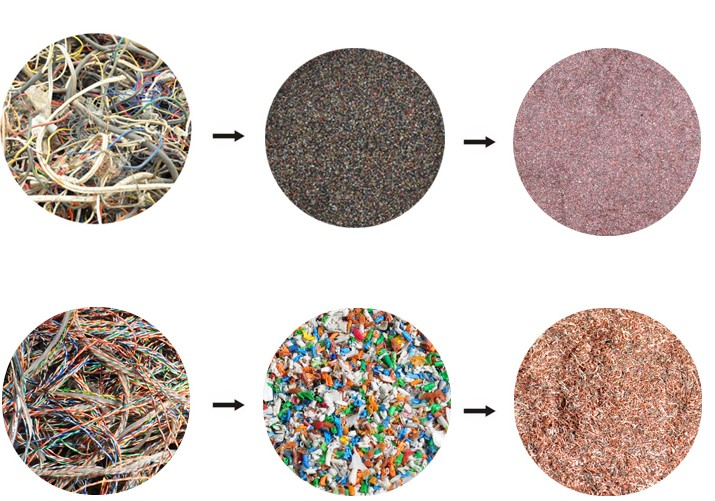
One of the key advantages of eddy current waste separation is its contribution to resource recovery and recycling. By efficiently extracting valuable materials from waste, the process reduces the need for virgin raw material extraction, subsequently lowering the environmental impact associated with mining and production. Additionally, by promoting recycling, the technology aids in minimizing landfill waste, which is crucial for sustainable waste management practices.
Moreover, eddy current separation is versatile and can be integrated into existing waste management systems. Its adaptability allows for easy upgrades to facilities looking to enhance their recycling capabilities. As environmental regulations become more stringent and public awareness of waste issues increases, the demand for effective separation technologies like eddy current systems is likely to rise.
In conclusion, eddy current waste separation represents a forward-thinking approach to managing the challenges posed by waste disposal and resource recovery. By harnessing electromagnetic principles, this technology not only streamlines the recycling process but also supports a circular economy, promoting sustainability and resource efficiency in an increasingly waste-conscious world.
Latest news
Troubleshooting Common Eddy Separator Problems
NewsJul.04,2025
The Role of Metal Recycling Plants in Circular Economy
NewsJul.04,2025
The Impact of Recycling Line Pickers on Waste Management Costs
NewsJul.04,2025
Safety Features Every Metal Shredder Should Have
NewsJul.04,2025
How Industrial Shredders Improve Waste Management Systems
NewsJul.04,2025
How Cable Granulators Contribute to Sustainable Recycling
NewsJul.04,2025


 Afrikaans
 Albanian
 Amharic
 Arabic
 Armenian
 Azerbaijani
 Basque
 Belarusian
 Bengali
 Bosnian
 Bulgarian
 Catalan
 Cebuano
 Corsican
 Croatian
 Czech
Czech
 Danish
 Dutch
Dutch
 Esperanto
 Estonian
 Finnish
 French
 Frisian
 Galician
 Georgian
 German
 Greek
Greek
 Gujarati
 Haitian Creole
 Hausa
Hausa
 Hawaiian
 Hebrew
 Hindi
Hindi
 Miao
Miao
 Hungarian
 Icelandic
 Igbo
Igbo
 Indonesian
 Irish
Irish
 Italian
 Japanese
 Javanese
 Kannada
 Kazakh
 Khmer
Khmer
 Rwandese
 Korean
 Kurdish
 Kyrgyz
 Lao
Lao
 Latin
Latin
 Latvian
 Lithuanian
 Luxembourgish
 Macedonian
 Malgashi
 Malay
Malay
 Malayalam
 Maltese
 Maori
Maori
 Marathi
 Mongolian
 Myanmar
 Nepali
 Norwegian
 Norwegian
 Occitan
 Pashto
 Persian
 Polish
 Portuguese
 Punjabi
 Romanian
 Russian
 Samoan
 Scottish Gaelic
 Serbian
 Sesotho
 Shona
Shona
 Sindhi
 Sinhala
 Slovak
 Slovenian
 Somali
 Spanish
 Sundanese
 Swahili
 Swedish
 Tagalog
 Tajik
Tajik
 Tamil
Tamil
 Tatar
Tatar
 Telugu
 Thai
Thai
 Turkish
 Turkmen
 Ukrainian
 Urdu
Urdu
 Uighur
 Uzbek
Uzbek
 Vietnamese
 Welsh
Welsh
 Bantu
Bantu
 Yiddish
 Yoruba
 Zulu
Zulu
 English