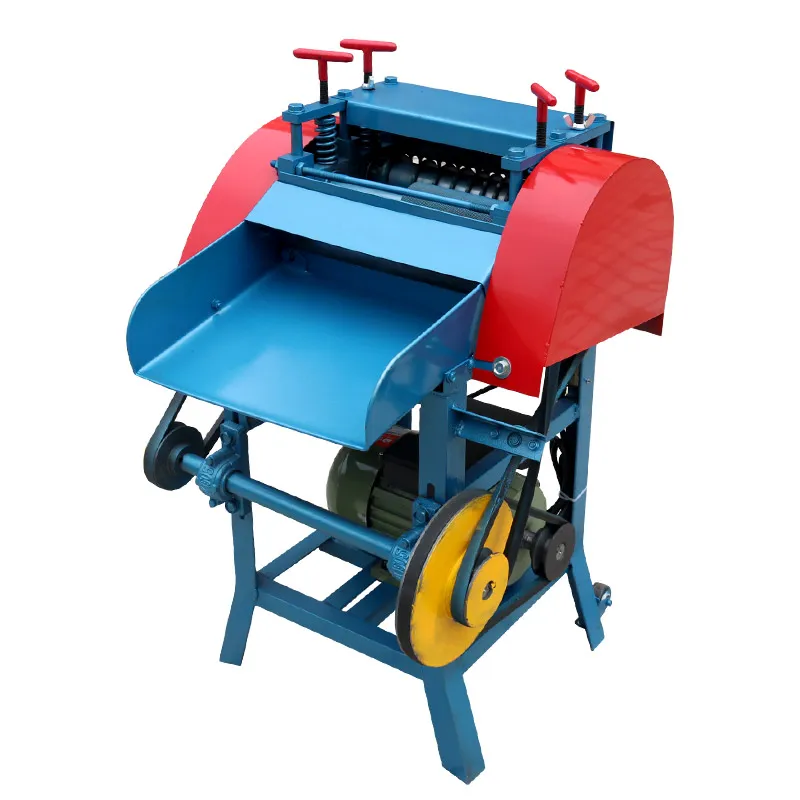
Industrial Metal Shredder Guide and Hammer Mill Crusher Price
Optimizing the processing of scrap metal and solid waste requires machinery that balances high throughput with structural durability. For operators handling car bodies, aluminum profiles, and household appliances, the ability to increase material density while removing impurities is critical for reducing smelting and transportation costs. High-capacity shredding technology serves as the primary stage in metal recovery, transforming bulky waste into manageable, furnace-ready feedstock.
Understanding the various factors that influence the hammer mill crusher price involves analyzing the balance between power requirements, knife durability, and the specific nature of the raw materials. Whether processing heavy-duty motor rotors or lightweight tin cans, the choice of equipment determines the final purity of the metal and the overall ROI of the recycling facility. This guide explores the technical specifications and operational advantages of industrial metal shredders designed for maximum recovery efficiency.

Engineering the Shredding Process for Maximum Metal Recovery
Industrial metal shredders are engineered to handle a diverse array of materials, from flattened car bodies to aluminum alloy window frames. The core mechanism relies on powerful smashing and compressing actions that not only reduce the size of the waste but also effectively separate non-metallic impurities. By increasing the bulk density of the material, these machines ensure that smelting plants receive a high-quality furnace charge, which significantly lowers the energy required for melting.
Modern recovery lines utilize advanced PLC control cabinets to ensure operational safety. These systems provide critical protection against overloads, short circuits, and phase-break scenarios, preventing costly downtime. The integration of slow-speed cutters is a strategic design choice; by reducing the rotational speed, the machinery increases its resistance to foreign objects, ensuring that the shredder can handle unexpected contaminants without catastrophic failure.
- Material Versatility: Capable of processing white goods, bicycles, and tinplate.
- Contaminant Removal: Efficiently eliminates dust and paint from waste materials.
- Noise Mitigation: Advanced technology integrated to reduce acoustic pollution in the workplace.

Technical Superiority of High-Capacity Metal Processing Units
The efficiency of a shredder is defined by its ability to maintain consistent throughput while minimizing wear on critical components. The use of thick, heavy-duty knives ensures that the machine can pierce and tear through high-strength alloys and heavy steel sections. This durability is essential for maintaining a high shredding efficiency over long operational cycles, reducing the frequency of knife replacements and maintenance intervals.
Beyond raw power, the intelligence of the system plays a vital role. Automated detection systems allow the machine to cut out instantly when non-shreddable foreign material is detected, protecting the drive train and the cutting chamber. This level of automation, combined with a hard-wearing design, allows for nearly 100% metal purification, making the output highly desirable for secondary metal refineries.
For facilities requiring large-scale operations, the capacity scales from 3 tons per hour up to 20 tons per hour. This scalability allows operators to match their machinery to the volume of their feedstock, ensuring that the shredder remains the heart of a lean, efficient recovery process.
Strategic Application Scenarios in Solid Waste Management
In the automotive recycling sector, the ability to process whole or flattened car bodies (excluding engines and gearboxes) is paramount. By shredding the aluminum body and steel chassis, recyclers can separate ferrous and non-ferrous metals more effectively. Similarly, the processing of "white goods"—such as refrigerators and washing machines—requires the removal of compressors and axles before the remaining metal shells are shredded to recover high-purity steel and aluminum.
The equipment is also indispensable for processing architectural waste, including roller shutter doors, color steel tiles, and aluminum window offal. These materials often contain a mix of metals and coatings; the shredding process helps in the effective removal of paint and dust, which is a critical requirement for meeting environmental standards and achieving high-grade recycled metal outputs.
Operational considerations for these scenarios include:
- Feeding Logistics: Utilizing the appropriate feeding opening width to minimize pre-processing.
- Power Infrastructure: Ensuring the facility can support main power requirements ranging from 200kW to 600kW.
- Environmental Compliance: Implementing the built-in dust removal systems to ensure a clean working environment.
Technical Specification and Capacity Comparison
| Model Number | Feeding Opening (mm) | Main Power (kW) | Processing Capacity (t/h) |
|---|---|---|---|
| BN100 | 1000 | 200 | 3-5 |
| BN160 | 1600 | 400 | 5-10 |
| BN300 | 2500-3000 | 600 | 20 |
| Custom Series | Variable | Application-dependent | Customized |
| Heavy-Duty | High-width | High-output | High-volume |
Evaluating Supplier Capabilities for Recycling Equipment
When selecting a partner for waste recovery equipment, the depth of their engineering experience is a primary indicator of future success. A professional entity specializing in solid waste recovery should offer more than just machinery; they must provide comprehensive project design and process optimization. This includes the ability to customize equipment based on the specific moisture content, hardness, and volume of the customer's raw materials.
A reliable supplier, such as Onwang Technology, leverages decades of experience to provide one-stop solution services. This encompasses the entire lifecycle from machinery selection and process design to technical training for operators. Such integrated support ensures that the equipment is not only installed correctly but is operated at peak efficiency to maximize the recovery of valuable non-ferrous metals.
Quality assurance is further validated through global deployment. Equipment sold to over 30 countries demonstrates the ability to meet diverse international standards and operate in varying climatic and industrial conditions. This global footprint reflects a commitment to scientific management and a quality-first business philosophy.
Future Trends in Metal Shredding and Material Recovery
The trajectory of the recycling industry is moving toward higher purity and lower energy consumption. Future advancements in shredding technology are focusing on further reducing noise pollution and improving the automation of foreign object detection. As environmental regulations tighten, the ability to remove paint and dust without secondary pollution will become a mandatory requirement for all smelting-charge preparation plants.
Furthermore, the integration of smart sensors and AI-driven feed control is expected to optimize the load on the motor, further extending the life of the heavy-duty knives. Operators are encouraged to invest in modular systems that can be upgraded as their processing volume grows, moving from mid-range models like the BN160 to high-capacity units like the BN300 without redesigning the entire facility layout.
Ultimately, the goal is to create a circular economy where 100% of the metal content from household and industrial waste is recovered. By investing in robust shredding technology today, companies position themselves to handle the increasing volume of urban mining opportunities while maintaining a competitive cost structure.
Frequently Asked Questions About Metal Shredders
What materials can the BN series metal shredders process?
The BN series is designed for a wide variety of scrap, including car bodies, aluminum cans, wheel hubs, aluminum alloy doors and windows, tinplate, bicycles, and various household appliances without motors or compressors.
How does the shredder handle non-shreddable foreign objects?
The machine utilizes slow-speed cutters to increase resistance to foreign objects and is equipped with an automatic cut-out mechanism that stops the machine immediately when a non-processible material is detected to prevent damage.
What is the benefit of using a shredder before smelting?
Shredding removes impurities, increases the bulk density of the metal, and reduces the volume of the material, which significantly lowers transportation costs and provides a superior furnace charge for the smelting plant.
Can the equipment be customized for specific waste types?
Yes, the manufacturer provides customized design and manufacture of products according to the special needs of customers, offering one-stop solution services from project design to machinery selection.
What safety features are included in the control system?
The PLC control cabinets are equipped with comprehensive protection systems, including overload protection, short circuit protection, and phase-break protection to ensure operator and machine safety.
Does the shredding process cause environmental pollution?
The equipment is designed for no-pollution operation, featuring advanced technology to reduce noise pollution and systems to effectively remove dust and paint from waste materials.
Technical References and Industry Sources
- Environmental Protection Agency - Recycling Guidelines
- ISO Standards for Environmental Management
- World Steel Association - Scrap Recovery Data
- International Energy Agency - Circular Economy Reports
Investing in high-efficiency shredding technology is a strategic move for any metal recovery operation. By focusing on capacity, durability, and the expertise of the manufacturer, you can ensure a sustainable and profitable recycling process.
Related Industry Insights